
History of the French Bulldog
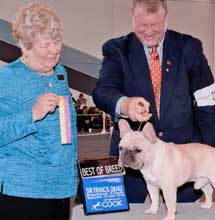
The French Bulldog dates back to the first dogs of the seventh century.
The Belgium monks of the Monastery of St, Hubert first undertook selective breeding to produce dogs which when bred to one another would look identical and continue to breed true to type, generation after generation. The success of their breeding program marked the beginning of dogs being classified as purebred.
The monks started their breeding program with a generalized Celtic type of hound from Gaul, France, and created the St. Hubert Hound. The St. Hubert not only bred true but also retained his excellent scenting ability. Word quickly spread throughout Europe about the Abbey's dog. It didn't take long for the St. Hubert to be a very popular dog in Europe. The St. Hubert was named for his founder.
Growth of Kennels
In Europe the St. Hubert scenting hound was infused with other types and strains of dogs.
After several generation of deliberate cross-breeding, numerous types of working dogs developed.
The Talbot and the Bloodhound were resulted from such cross-breeding.
As numerous strains of dogs developed it became advantageous to identify the various strains by name.
Development of Kennel Names
Early kennels were known for taking the name of the family that bred them. As litters were whelped diaries were kept in great detail on the offspring. By the 1600's kennel names were well established in both England and the United States. Early French Bulldogs The origins of the French Bulldog are traced to England, during the 19th century. The dogs first appeared in litters of normal-sized English Bulldogs. The runts were not desirable by the English bulldog breeders. The small sized English Bulldogs were culled from the breeding lines of the early kennels. As a result, the earliest kennel names that produced the small sized bulldogs remain obscure.
Popularity of the Small Bulldogs
Although the small bulldogs were not desired by English Bulldog breeders, they gained popularity with other members of the British population.The miniature Bulldogs were a favorite of the working class and artisans, especially English lace workers in Nottingham. After the start of the Industrial Revolution the lace workers immigrated to Brittany to find new work, taking their small bulldogs with them.
Logan Lane Kennels History
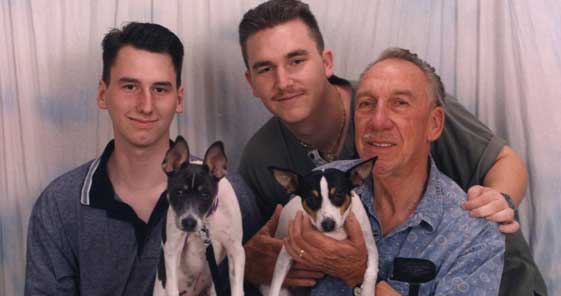
After years of selective breeding we have achieved a what we have attempted to achieve throughout the years.
Logan Lane Kennels is proud to have authored the first book on the Rat Terrier. Additionally, we have written numerous articles on the breed that have been published in England and other European Countries.
We are proud to have had the privilage of developed the breed when it was a strain without a breed standard and primarily registered with Universal Kennel Club. As we wrote and bred on the breed the Rat Terrier gained recognition with United Kennel Club. This took place the year the book was published. At the time little was know about the rare breed.